
Last updated: October 10, 2026
Key Takeaways
- Bing Copilot frequently paraphrases material from web pages rather than quoting them verbatim.
- A single visible citation can appear while supporting facts come from other pages.
- Compared with classic search, Copilot leans much more on synthesis and summary.
- Publishers should anticipate links but not expect precise, line-by-line citation behavior.
Three outcomes are common when Bing Copilot touches your article: your URL may appear, your wording may not, and clicks might not follow. Partial credit. Not full.
I cover search and publisher visibility, and the central practical question is straightforward: how does Copilot treat content it finds, and how much control does a publisher have over that crediting?
The short answer publishers need first

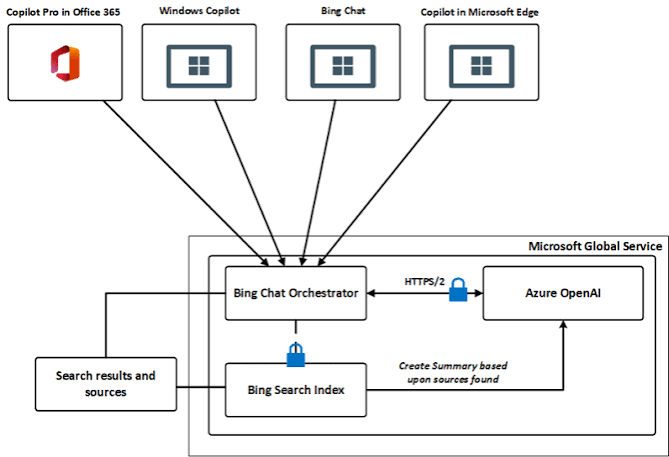
Quick Answer: testing and Microsoft’s documentation show that Copilot-style responses often include source links, yet individual factual bits inside an answer are not always cited. Expect partial attribution rather than perfect, footnote-style credit. The system builds replies from retrieved material, then surfaces links where it judges they support the reply; it does not behave like a human editor who quotes every line.
Publishers holding original reporting, reference material, or niche expertise should plan for three outcomes. One: your page might appear even when not quoted. Two: your URL can be shown without producing a large click volume. Three: visible attributions shift from query to query because answers are assembled on the fly.
Treat Copilot as a discovery layer, not a license or citation machine — that is Microsoft’s own framing of these AI-assisted search features. A page can be summarized, linked, and nonetheless not read in full by the user.
How does Bing Copilot decide which sources to show?
Sources appear because they seem relevant to the answer Copilot is composing; not every contributing page will be exposed. This matters: Copilot is an answer engine, not an archive of exhaustive citations.
In practice, pages that are easier for automated systems to parse tend to be favored — clear headings, short definitions, structured data, and obvious topical authority help. A 2024 article with a specific subheading will often be easier to map to a question than a long undifferentiated 2021 page that covers the same topic. Machine-readable packaging wins.
Consequently, a concise explainer or a large, trusted publisher’s summary may be cited instead of the original item that first reported a detail. For publishers, that’s the trade-off: originality matters, but so does retrievability.
Don’t read too much into a one-off missed link. The system picks sources per query and those picks can move. But consistent absence from source lists on topics you clearly cover signals a structural problem — your content may not be organized in a way that competes well for retrieval.
Where does attribution break down?

Attribution slips mostly when the reply blends several sources into a single, succinct answer. A top-cited source may anchor the panel while supporting passages from other pages are merely paraphrased and left without visible links. That’s how synthesis works; it’s also maddening for publishers who want itemized credit.
Common failure modes include:
- Paraphrase without direct quotation. Meaning survives but wording changes enough that the origin becomes obscure.
- Source compression. Multiple contributors feed an answer, yet only a subset show up in the citation panel.
- Attribution drift. A stat can be pinned to a page that did not originate it because the system found that page convenient to support the claim.
- Query sensitivity. Reword the prompt and a previously visible source can vanish.
Line-level editorial attribution is not what Copilot aims to deliver; instead, it offers a guided summary. For some publishers that is acceptable. For others, especially those needing exact quotation or prominent brand association, it’s a poor match.
Short version: expect discovery, not guaranteed provenance.
Bing Copilot vs. classic search snippets: what changes for publishers?
Think of classic search as conservative and Copilot as synthesis-first; that difference explains most publisher concerns.
Traditional snippets show a title, a brief excerpt, and a URL. Copilot can do that too — and then go further by summarizing across several sources into one fluent answer, which can remove the user’s need to click. If the reply satisfies, users stop. If they want more, they follow the cited links.
Here is the side-by-side that matters for publishers:
| Criteria | Bing Copilot | Classic search snippet | Winner for this condition |
|---|---|---|---|
| Visible source naming | Often links sources in the answer panel | Shows one result at a time | Copilot, when you want cross-source visibility |
| Exact quotation | Less common | More likely via snippet text | Classic search, for wording fidelity |
| Traffic potential | Can reduce clicks on simple queries | Usually preserves more clicks | Classic search, for click-first publishing |
| Answer completeness | Strong on concise explanations | Depends on result page quality | Copilot, for quick synthesis |
| Attribution clarity | Helpful but not always exhaustive | Cleaner one-page origin | Classic search, for single-source credit |
| Source mixing | Common | Rare in the snippet itself | Classic search, for provenance |
| Update speed | Can change with the answer model | Changes with index and ranking | Tie, depending on indexing |
| Best fit for research | Good for orientation | Better for tracing one source | Classic search, for auditability |
Which wins depends on your aim. Want to be the canonical click target for a specific claim? Classic search makes that easier to expect. Want to be discoverable inside a conversational, multi-source answer? Copilot can surface your URL in a different context. The result feels authoritative — sometimes too authoritative given fuzzy source ownership.
What should publishers expect from source links and naming?
Expect links, but not strict citation discipline. The system might show a domain, a page title, or a source card; none of those equal a careful in-text quotation. If you only want to know whether Copilot will mention your site: often yes, provided the page is indexed and relevant. If you want every important point tied to its exact origin: do not count on that.
Many cited pages receive little engagement because the visible link functions more like a provenance flag than a traffic promise. The answer may satisfy the user inline.
Pages with plain, descriptive titles are likelier to be picked. A title that states the topic in straightforward language gives retrieval systems a direct mapping — a page named “How X Works” beats a cryptic headline.
That advantage comes at a cost: nuance, brand voice, and subtle framing can be flattened. If your editorial value depends on distinctive tone, a model that neutralizes style will erode that edge.
When is Bing Copilot a problem for publishers?
When your content only yields value if read in full. Original reporting, layered analysis, industry commentary — these types rely on sequence and nuance, not on isolated facts. Compressible content is the worst hit.
If your business model depends on pageviews from basic informational queries, expect disruption. A user seeking a date, definition, or quick comparison may get what they need from the inline answer and skip the site. That changes the economics; it doesn’t automatically mean the system is bad.
Be especially wary if you produce:
- reference pages that compress to one or two sentences,
- commodity explainers repeated widely online,
- articles light on proprietary data, or
- pages that rely on ad revenue delivered after the click.
Copilot can still drive traffic when users want to verify or dig deeper. But when a page is merely the most convenient summary, the engine will use that summary more than it compensates for it. I think that’s fair in technical terms — inconvenient for some business models.
What can publishers do to improve attribution odds?
Make pages easier to retrieve, easier to identify, and harder to mistake for copies. Those are practical levers you control.
Focus on five things:
- Use precise headings. A clear heading helps map a passage to a query.
- Put the key answer early. State the main point in the first 100 to 150 words.
- Add structure. Lists, tables, and subheads create clean anchors for retrieval systems.
- Differentiate with specifics. Numbers, dates, model names, standards, and terms of art increase attribution chances.
- Build topical authority. A cluster of pages on a subject beats a single thin article.
No known trick forces Copilot to cite you the way an editor would. If someone promises that, be skeptical. The model is built to answer — not to serve as a publisher-credit machine.
Publish content that a machine can parse easily yet that still contains enough depth to justify a click. Strange as it sounds, aim to be both summary-friendly and indispensably detailed.
What is the bottom line for publishers?
Choose Copilot when you prize discoverability inside a conversational answer layer and your content tolerates partial summarization. Choose a search-first approach when you need exact quotes, clear page-level credit, and reliable click-throughs from single-source queries. Reject neither model if your revenue depends on every reader consuming the full article first.
That is my current view. Copilot is useful but imperfect for citation; it can surface and name your work, while simultaneously compressing away the parts that make it uniquely valuable.
Treat Copilot as a visibility channel, not an attribution steward. If your pages are structured well, original, and hard to paraphrase, you increase your odds of being named and noticed. Generic, thin, or easily reducible pages should expect use without reward.
Exception scenarios where the verdict flips
Local or niche authorities with small, loyal audiences can benefit even when raw clicks fall. A 2024 how-to with deep topical depth may earn a single, well-placed citation — that can drive qualified exposure.
Highly factual materials can also win: standards pages, product-spec explainers, and policy summaries may gain trust through source visibility despite short answers. In contrast, content behind paywalls or gated behind weak previews tends to perform poorly — the system cannot reward what it cannot access.
Depend heavily on brand voice? Be cautious: sharp editorial tone often loses some of its distinctiveness once a model rewrites it into neutral answer language.
Questions publishers ask me most
Does Bing Copilot always show sources?
No. It often does, yet source visibility shifts with query wording, answer format, and what the system retrieved.
Can I make Copilot attribute my page more clearly?
Not directly. You can improve your odds with structured headings, precise titles, and specific facts, but you cannot force consistent citation behavior.
Will Copilot reduce my traffic?
Yes, sometimes. The effect is strongest on basic informational queries where the answer appears inline.
Is Copilot bad for publishers?
Not inherently. It changes the economics: useful for discovery, risky for pages whose value vanishes when compressed.
What kind of page is most likely to be cited well?
A clearly focused page with specific facts, strong structure, and a title that matches user questions tends to perform best.
Drafted with AI; not yet reviewed by a person.